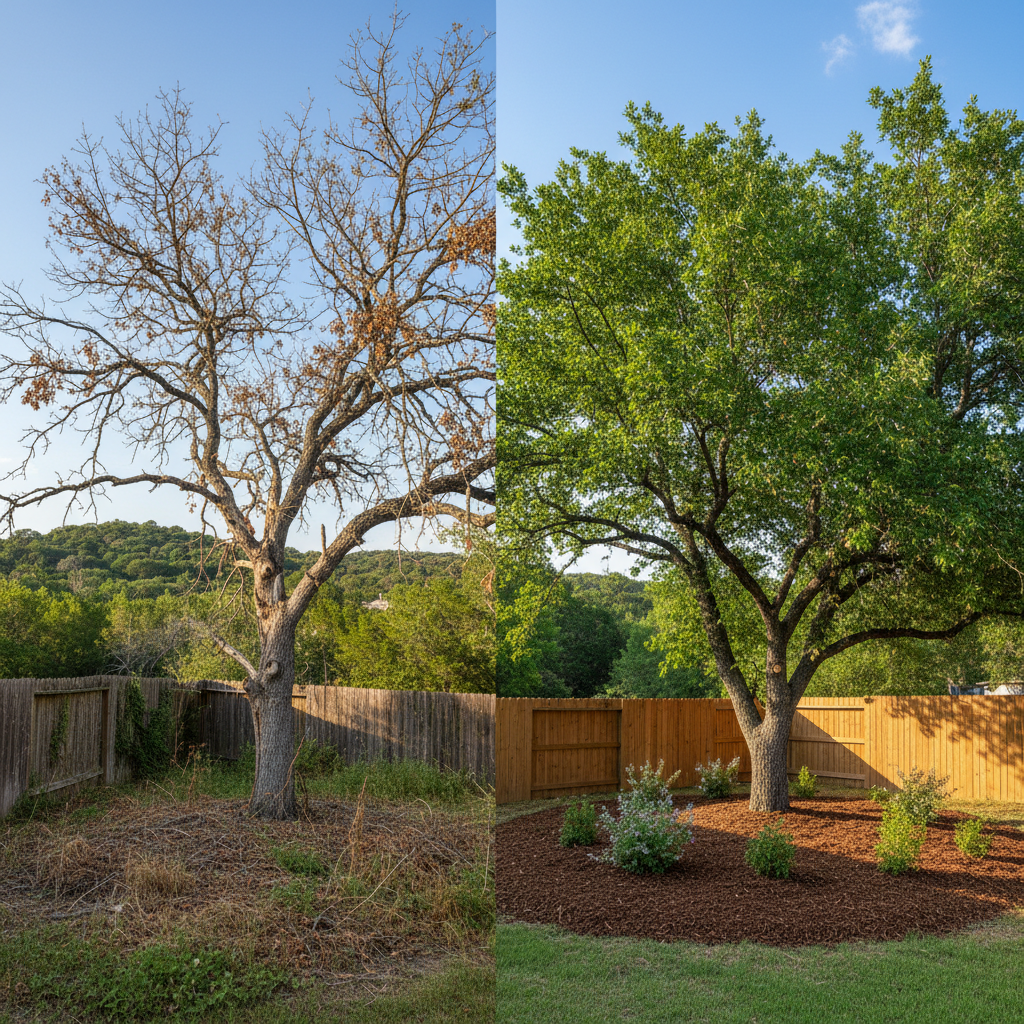
Your trees are a big part of your property here in Bee Cave. They provide shade, beauty, and can even boost your home's value. So when one starts looking a little rough – yellow leaves, slow growth, or maybe some strange spots – you want to fix it. Fast. You've probably heard about tree injections, and maybe also about improving soil. But which path is the right one for your trees?
I've seen a lot of trees come and go in this area, and I can tell you, there's a big difference in how these two approaches work. Let's talk about it.
Tree Injections: The Quick Fix
So, what exactly are tree injections? Think of them like a shot for your tree. We drill small holes into the trunk, usually around the base, and then inject a concentrated dose of nutrients, insecticides, or fungicides directly into the tree's vascular system. The idea is to get that treatment where it needs to go quickly, bypassing issues with soil absorption or spray drift.
Cost & Durability
Injections can be pretty effective, especially for specific, active pest infestations or nutrient deficiencies. They're often seen as a quicker solution because the tree absorbs the treatment directly. The cost can vary a lot depending on the size of the tree and what we're injecting. For a single treatment, it might be a few hundred dollars. The durability? Well, that's where it gets tricky. Most injections aren't a permanent fix. They'll typically last anywhere from one to three years, sometimes less, depending on the product and the tree's health. You're usually looking at repeat treatments.
Maintenance & Appearance
From a maintenance standpoint, it's pretty hands-off after the initial injection. You don't have to do anything else until the next treatment is due. As for appearance, if the injection successfully treats the problem, your tree should start looking better. However, those small drill holes? They're wounds. While trees are pretty resilient, repeated injections in the same area can cause damage over time, creating entry points for disease or weakening the trunk structure. I've seen trees that look like Swiss cheese after years of this, and that's not good for long-term health or aesthetics.
Soil Health & Integrated Pest Management (IPM): The Long Game
Now, let's talk about the other approach: focusing on soil health and using an Integrated Pest Management (IPM) strategy. This is a more holistic, long-term way of thinking about tree care. Instead of just treating the symptom, we're trying to get to the root cause – literally.
Cost & Durability
Improving soil health involves things like adding organic matter, using beneficial microbes, adjusting pH, and ensuring proper drainage. It might also include targeted fertilization based on soil tests. For pest issues, IPM means identifying the specific pest, understanding its life cycle, and then using the least invasive, most effective method to control it. That could be introducing beneficial insects, using horticultural oils, or, as a last resort, targeted sprays.
The initial cost for soil amendments and an IPM plan might feel similar to an injection, especially if it involves a comprehensive soil test and multiple steps. But here's the kicker: the durability is far superior. When you improve the soil, you're building a stronger foundation for the tree's entire life. You're not just treating a symptom; you're making the tree more resilient to future problems. It's an investment that pays off for years, often reducing the need for expensive interventions down the road.
Maintenance & Appearance
Maintenance for this approach is more ongoing, but it's generally less invasive. It might mean regular mulching, occasional soil amendments, and consistent monitoring for pests or diseases. You're actively participating in your tree's health, rather than just waiting for the next injection. The appearance? Healthy trees with vibrant foliage, strong growth, and no unsightly drill holes. You're helping the tree help itself, which is always the best look.
My Recommendation for Bee Cave Homeowners
Look, if you've got a tree that's on death's door and needs an immediate, aggressive intervention to survive, an injection might be the right call to buy you some time. It's a powerful tool in specific situations.
But for the vast majority of trees in Bee Cave, especially with our challenging rocky soils and occasional droughts, I'm going to lean heavily towards focusing on soil health and a smart IPM strategy. Why? Because it addresses the fundamental needs of the tree. Many of the problems we see – nutrient deficiencies, pest susceptibility, disease – often start with poor soil conditions or a stressed tree.
Think about it: our soil here, especially in areas like Falconhead or Spanish Oaks, can be pretty thin and rocky. It doesn't always hold nutrients well, and drainage can be an issue. If your tree isn't getting what it needs from the ground up, it's going to struggle. An injection might give it a temporary boost, but it's like putting a band-aid on a deeper wound.
Investing in your soil and understanding the ecosystem of your yard creates a healthier, more resilient tree that can fight off problems naturally. It's less about reacting to a crisis and more about proactive, sustainable care. You'll have stronger, more beautiful trees that stand the test of time, and you'll likely save money in the long run by preventing recurring issues.
If you're seeing signs of stress on your trees, don't just guess. Get a professional opinion. We can do a soil test, identify any pests or diseases, and help you put together a plan that makes sense for your specific trees and your property. At Bee Cave Tree Service, we're all about giving your trees the best chance to thrive, not just survive.